Nonstop Eurotrip

Nonstop Eurotrip
May 24, 2026
Click Below To Watch This Video On YouTube!
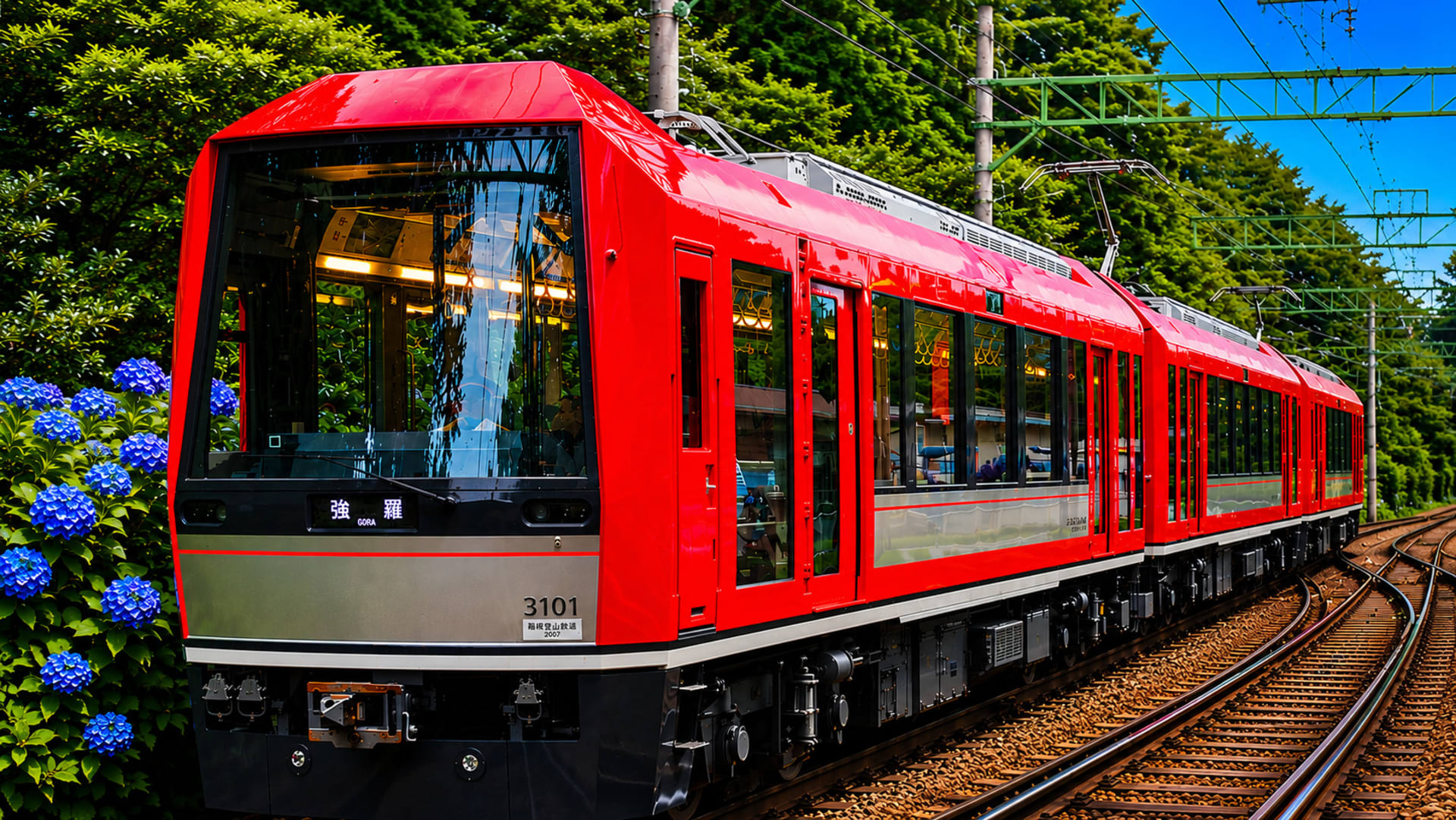
Nestled among volcanic mountains, dense forests, and breath-taking valleys, Japan’s Hakone region offers one of the country’s most spectacular rail journeys. Today, I travelled aboard the legendary Hakone Tozan Railway - Japan’s steepest conventional railway - before continuing by funicular and cable car towards stunning viewpoints of the iconic Mount Fuji. From high-speed Shinkansen trains to mountain switchbacks and volcanic landscapes, this journey perfectly showcases why Japan remains one of the greatest countries in the world for rail travel.
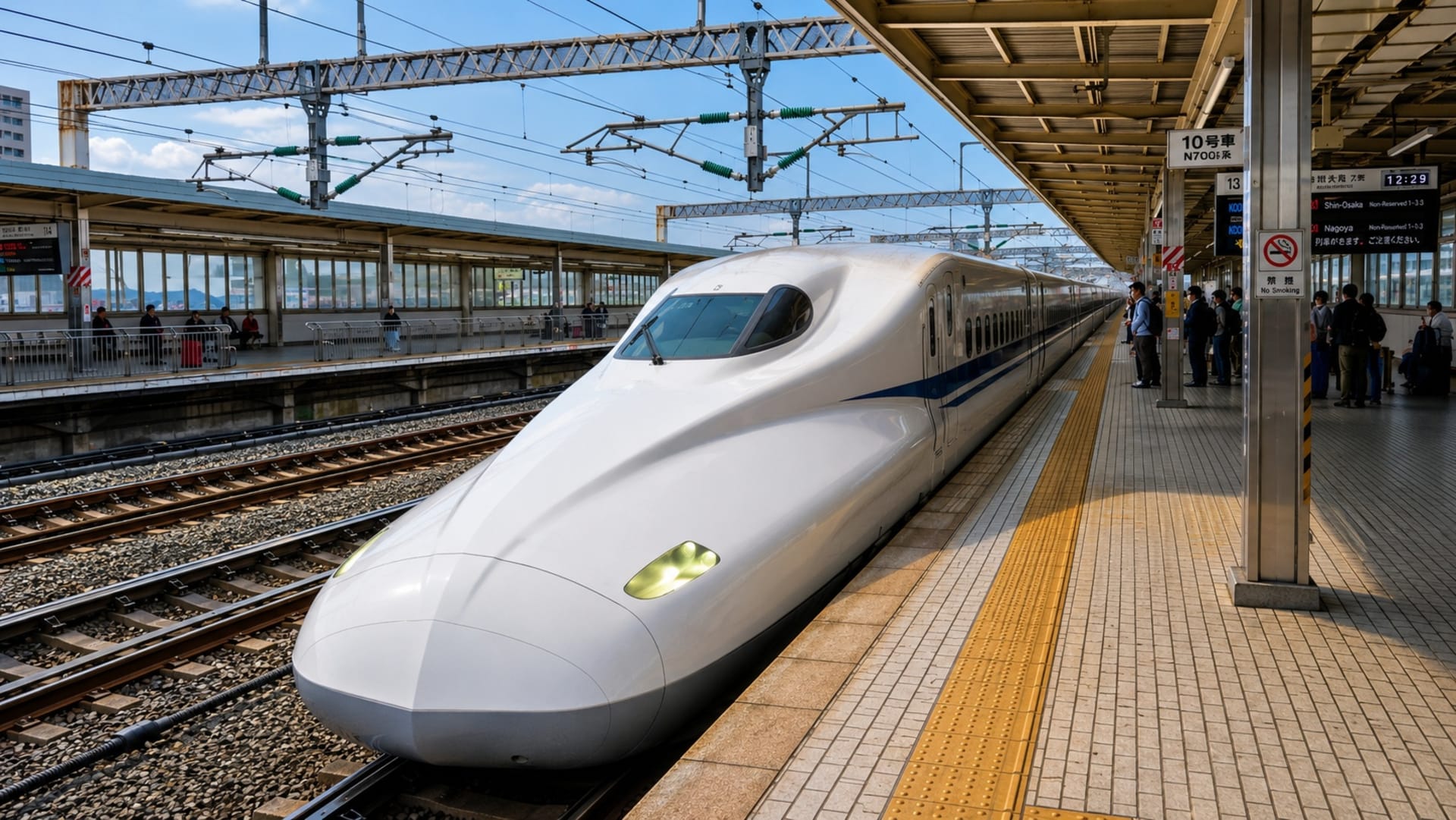
The adventure started aboard the famous Tokaido Shinkansen, Japan’s busiest high-speed rail corridor linking Tokyo and Osaka. With up to 17 departures every hour, these sleek bullet trains race across the country at speeds of up to 285km/h (177mph), covering the 515km route in as little as two and a half hours. Even decades after their introduction, the Shinkansen remain among the most iconic trains ever built. Watching them glide effortlessly at such speeds through stations never gets old. I arrived at Odawara Station, the gateway to Hakone and the interchange point between Japan’s high-speed rail network and this mountain railway adventure. The station itself is modern, easy to navigate, and well-equipped for tourists, with shops, restaurants, ticket machines, and an excellent tourist information centre staffed by friendly English speakers.
Before beginning the mountain section, I picked up the incredibly useful Hakone Free Pass. This ticket covers unlimited travel across nearly all transport in the region, including trains, funiculars, ropeways, buses, and even the sightseeing pirate ships that cross Lake Ashi. The two-day pass costs ¥6,000 and offers fantastic value considering how much transport is included. There are also add-on options for travel from Tokyo’s Shinjuku Station, which include the famous RomanceCar limited express services.

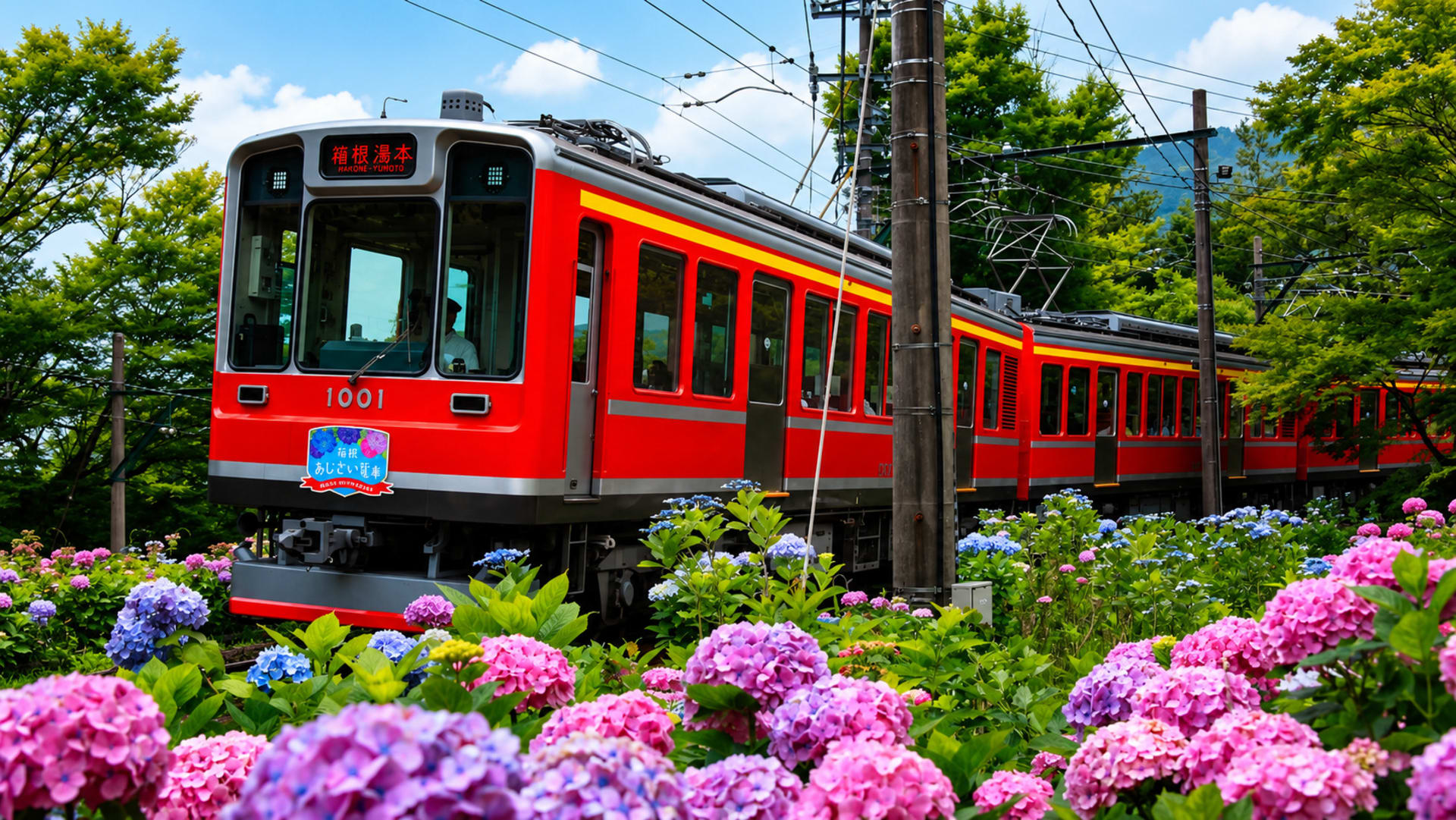
The first train of the day was a short local service from Odawara to Hakone-Yumoto, the starting point of the scenic mountain railway. The 15-minute ride may not be the headline section, but it already offered lovely riverside scenery as the line followed the Haya River into the mountains. Most of the route is single track, with passing loops at stations where trains briefly wait for services travelling in the opposite direction. Even here, Japan’s railway precision is on full display, with every arrival and departure occurring exactly on schedule. At Hakone-Yumoto, passengers transfer directly onto the panoramic mountain trains that tackle the steep ascent towards Gora. If you are coming on one of the Limited Express services from Shinjuku Station, you don’t need to make this first connection as your train will terminate here.
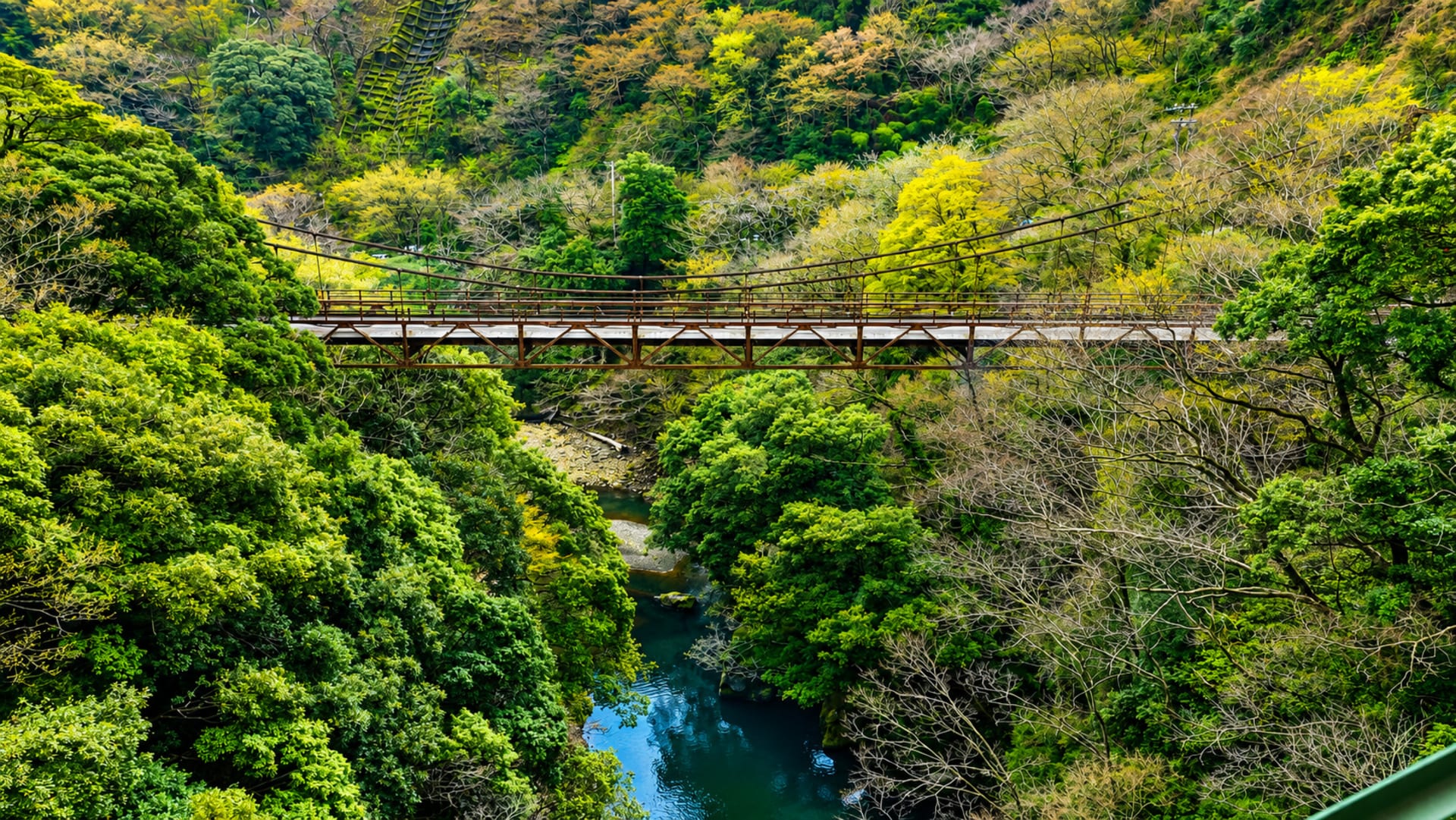
This is where the journey becomes truly spectacular. The Hakone Tozan Railway climbs dramatically through dense woodland, twisting valleys, and rugged mountain terrain. The line uses a series of remarkable switchbacks, also known as zig-zags, to gain elevation without requiring a rack railway system. At each switchback, the train pulls into a siding, the driver changes ends, and the train continues climbing in the opposite direction. It’s an incredibly rare sight on a modern railway and makes the journey feel even more unique. The steepest gradient reaches an incredible 8%, or 1 in 12.5, making it officially the steepest conventional adhesion railway in Japan. Unlike many mountain railways around the world, which use narrow gauge tracks, the Hakone Tozan Railway is standard gauge - another unusual engineering achievement.
One of the things I loved most about the line was its fascinating mix of old and new rolling stock. Alongside modern panoramic trains, classic vehicles dating back almost a century still operate regular services. One highlight was spotting the beautifully preserved 100 series MoHa 2 EMU, originally built in 1927. Every station along the line features clear bilingual signage with station numbers and route abbreviations, making navigation incredibly easy even for international visitors. The railway itself has a fascinating history too. Originally opening as a horse-drawn railway in 1888, it later became electrified before the full mountain route to Gora opened in 1919.
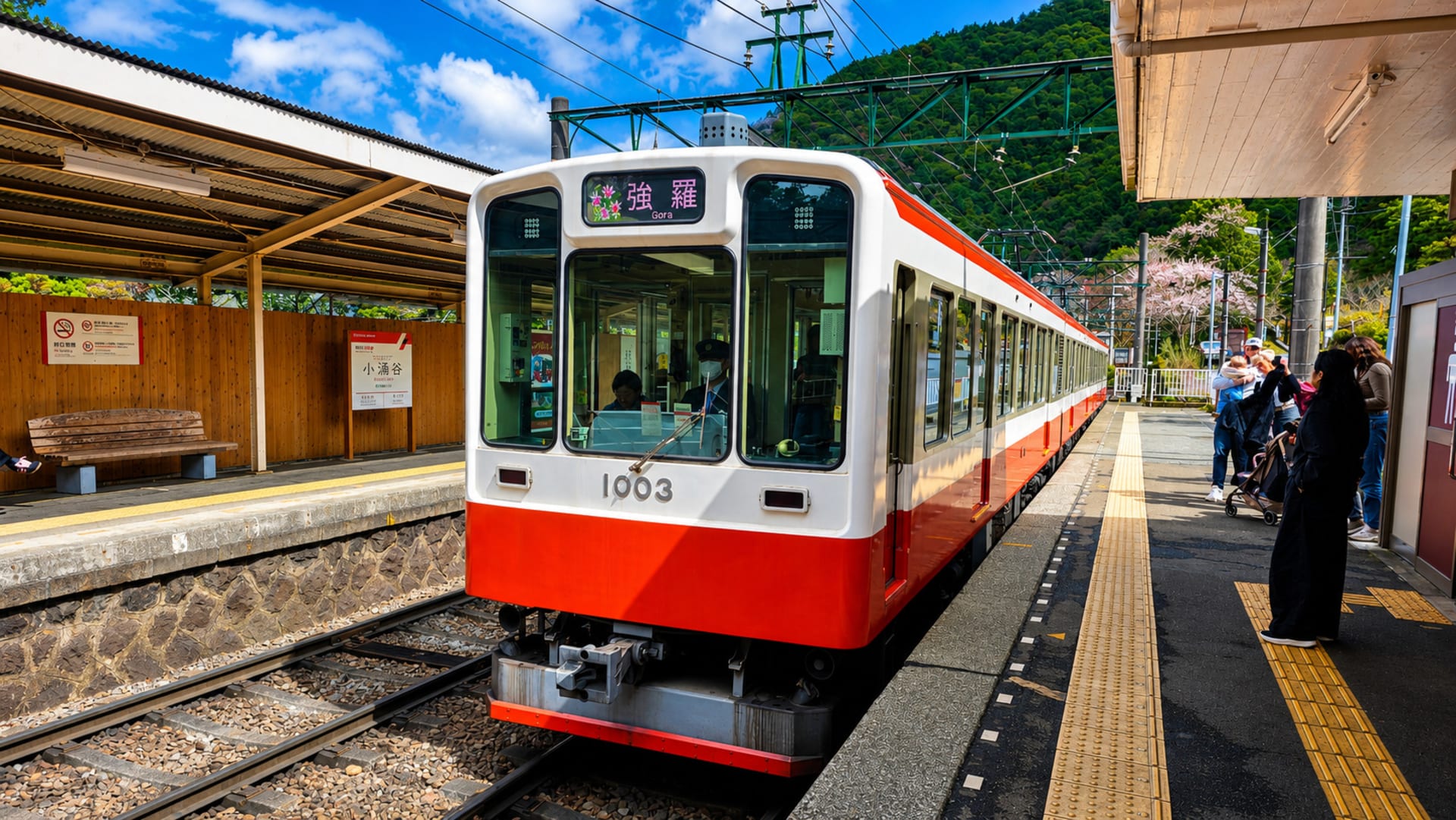
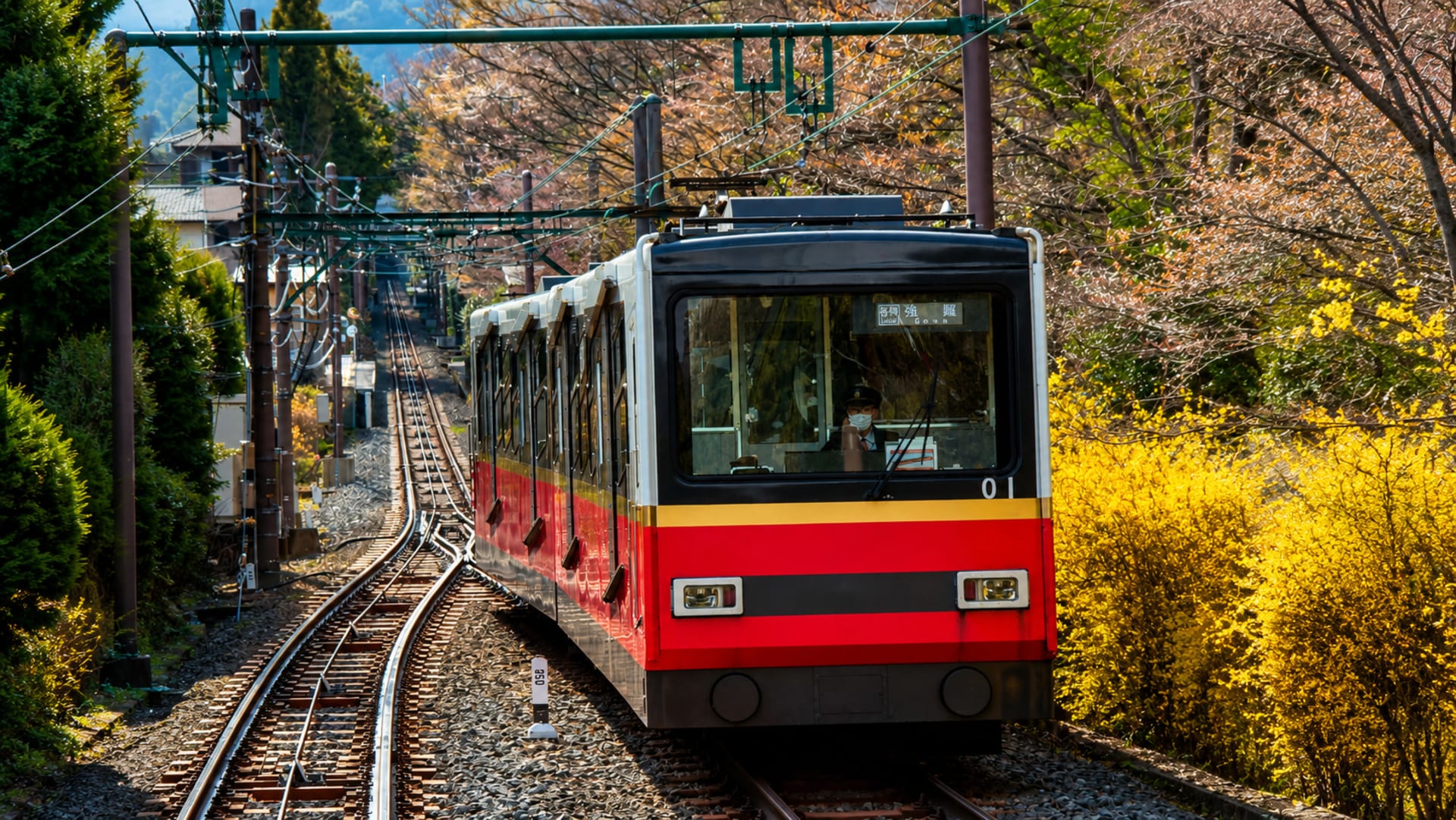
Right on time, we arrived in the mountain town of Gora, surrounded by forests and steep hillsides. The railway here is twinned with Switzerland’s famous Rhaetian Railway, highlighting the similarities between the two mountainous regions and their scenic railways. From here, the journey continued uphill via the Hakone Cable Car - which, confusingly, is actually a funicular railway rather than an aerial cable car.
The short but steep funicular climbs 208 metres over just 1.2km, with gradients reaching 20%. Opened in 1922 and rebuilt in the 1990s, the line uses two cable-hauled cars operating on a single track with a passing loop in the middle. Despite the crowds, the large panoramic windows and excellent views make the ride thoroughly enjoyable. At the summit station of Sounzan, it was time for the final stage of the journey - the ropeway across Hakone’s volcanic landscape.
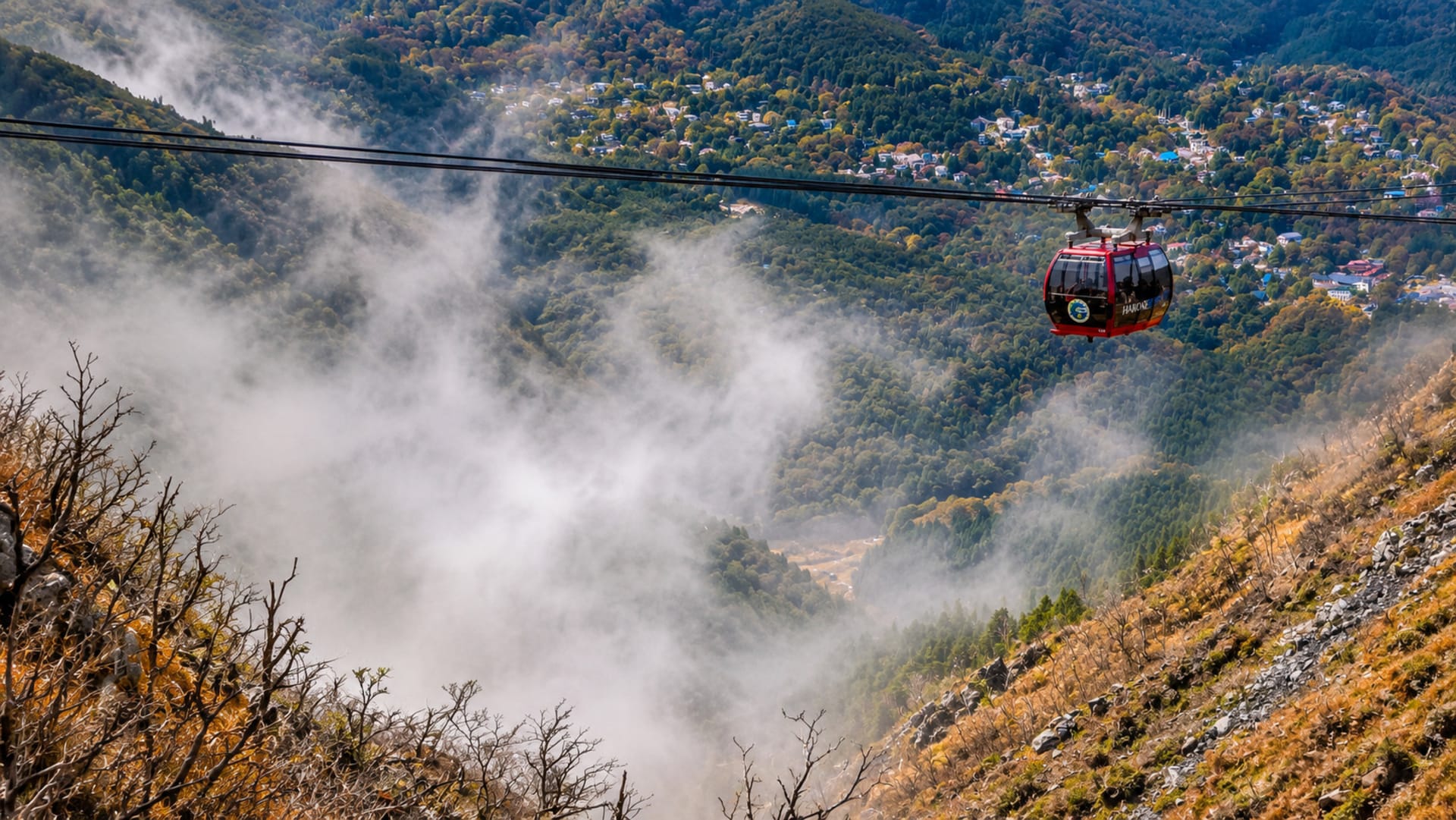
The Hakone Ropeway is one of the highlights of the entire region. Modern 18-person gondolas glide silently above forests and volcanic terrain, climbing towards Owakudani - the “Great Boiling Valley.” As the ropeway crossed the valley, clouds of steam rose dramatically from hundreds of thermal vents scattered across the mountainside. The smell of sulphur filled the air, a constant reminder that Hakone remains volcanically active even today. Then, suddenly, through the haze in the distance, appeared Mount Fuji. Seeing Japan’s most famous volcano emerge above the landscape was an unforgettable moment and the perfect finale to an already spectacular journey.
At the top station, Owakudani offers cafés, restaurants, observation points, and walking trails around the volcanic area. You can then continue onwards to complete the famous Hakone Loop, combining the ropeway with sightseeing boats across Lake Ashi and buses back towards Odawara.
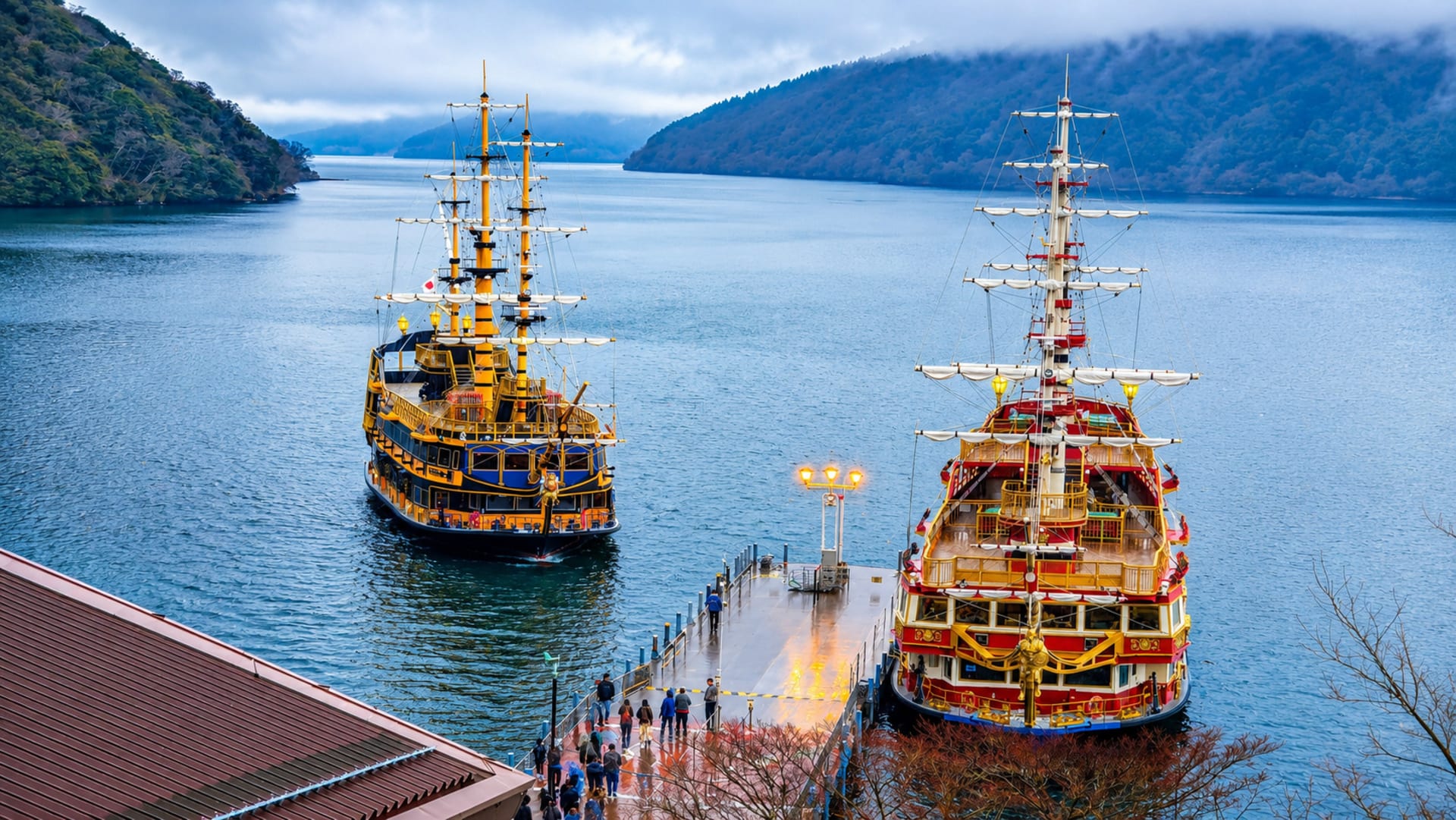
The Hakone Tozan Railway is much more than just a train ride. It’s a complete mountain transport adventure combining historic railways, engineering marvels, dramatic scenery, and iconic Japanese landscapes. From the precision of arriving on the Shinkansen, to the steep switchbacks of the mountain railway and the volcanic ropeway crossing, every part of the experience feels uniquely Japanese. Whether you’re a railway enthusiast, a nature lover, or simply searching for one of Japan’s best day trips, Hakone absolutely deserves a place on your itinerary.
Keep exploring more train journeys, route notes, travel reviews, and practical trip reports from Nonstop Eurotrip.

Explore my latest uploads where i share thrilling adventures from around the world.